

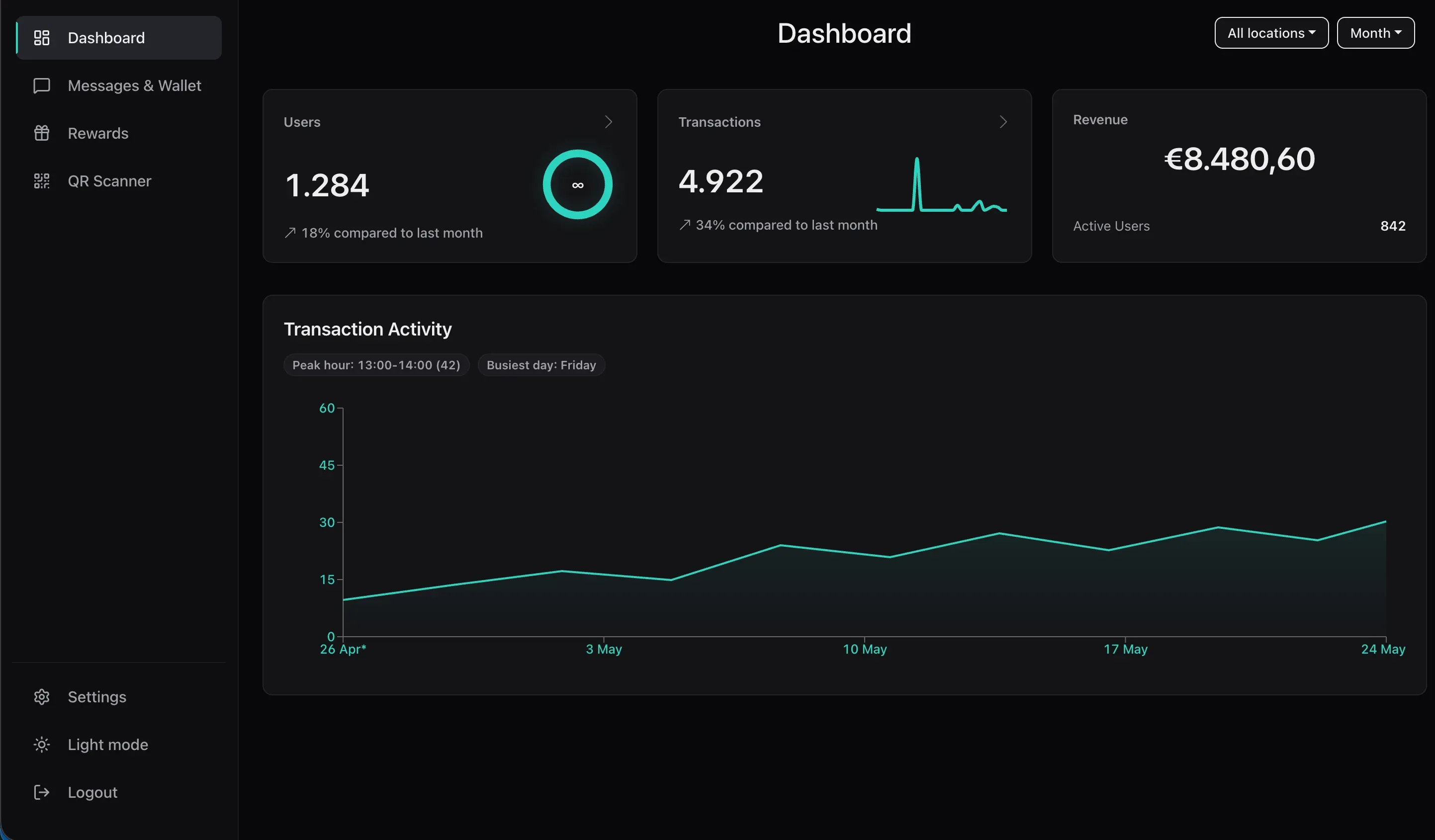
For owners
Merchant dashboard
Programmes, card design, locations, staff, messaging and customer activity in one multi-tenant web app.
- React
- TypeScript
- EN · NL · EL

Case study · Designed, built and operated by MintRadix
Loyaltree is a SaaS product our team designed, built and runs in production. It connects a merchant web dashboard, a native staff app, Apple and Google Wallet passes and the backend services behind them into one system that businesses use every day.
The challenge
Small hospitality businesses wanted loyalty customers would actually use, and a way to see who comes back. That meant solving several problems at once.
Customers join and collect rewards without downloading anything, so the card had to live in Apple Wallet and Google Wallet.
Signed pass files and device push on Apple, an API and signed callbacks on Google. Both had to behave as one product.
Staff scan during service, often with a queue. Adding points or redeeming had to be fast and hard to get wrong.
Every business, location and employee needed isolated data, roles and permissions, and everything had to stay in sync.
The solution
Instead of separate tools stitched together, we designed Loyaltree as a connected system. Three clients serve three audiences. They all talk to one core API, and a dedicated service handles everything wallet-related.
What we built
For owners
Programmes, card design, locations, staff, messaging and customer activity in one multi-tenant web app.
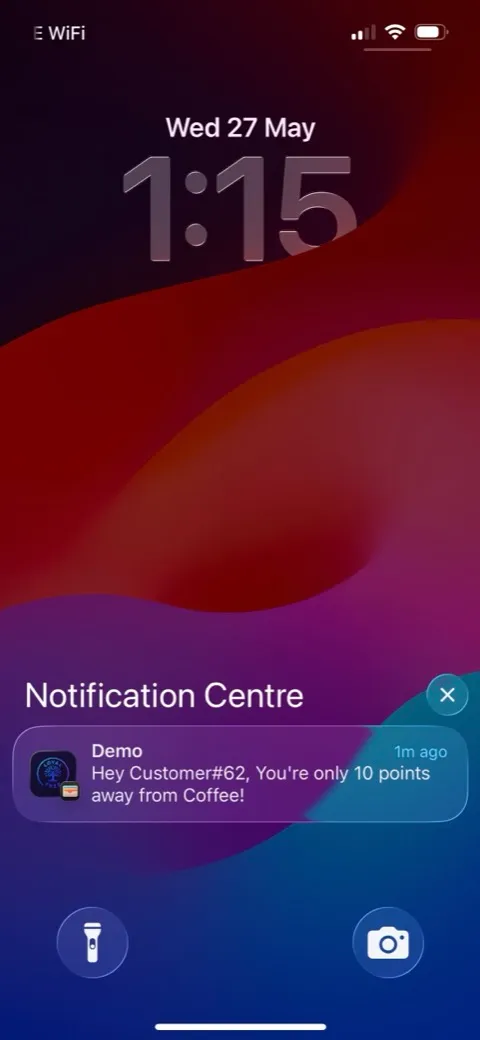
For customers
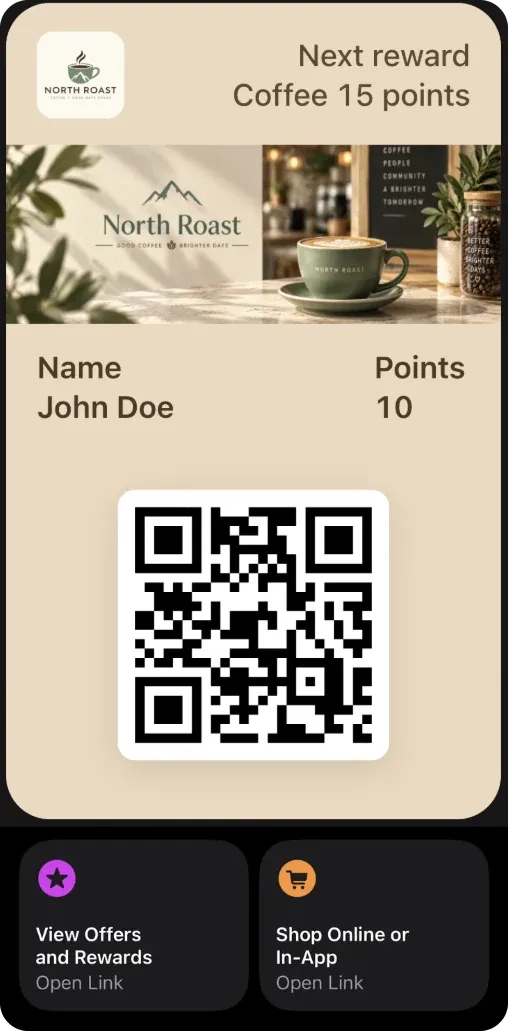
A branded pass saved from a QR code. Balances update on the pass and messages arrive as wallet notifications.
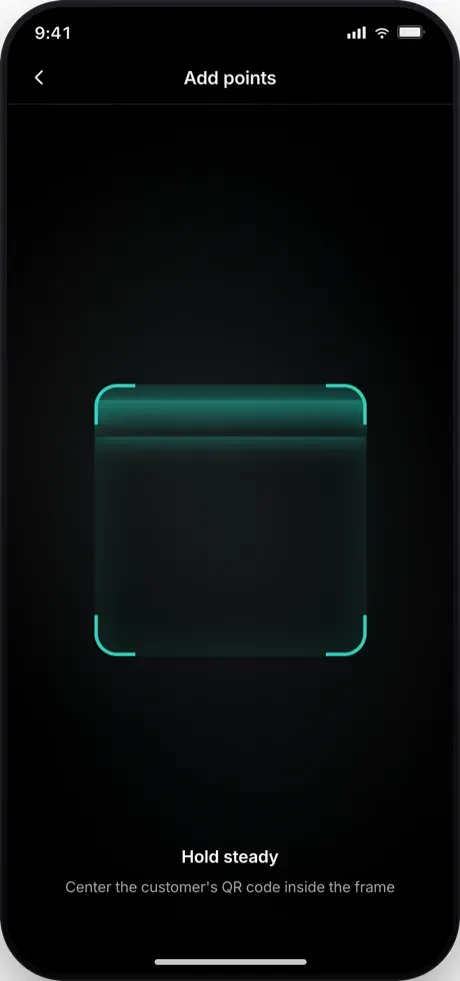
For employees
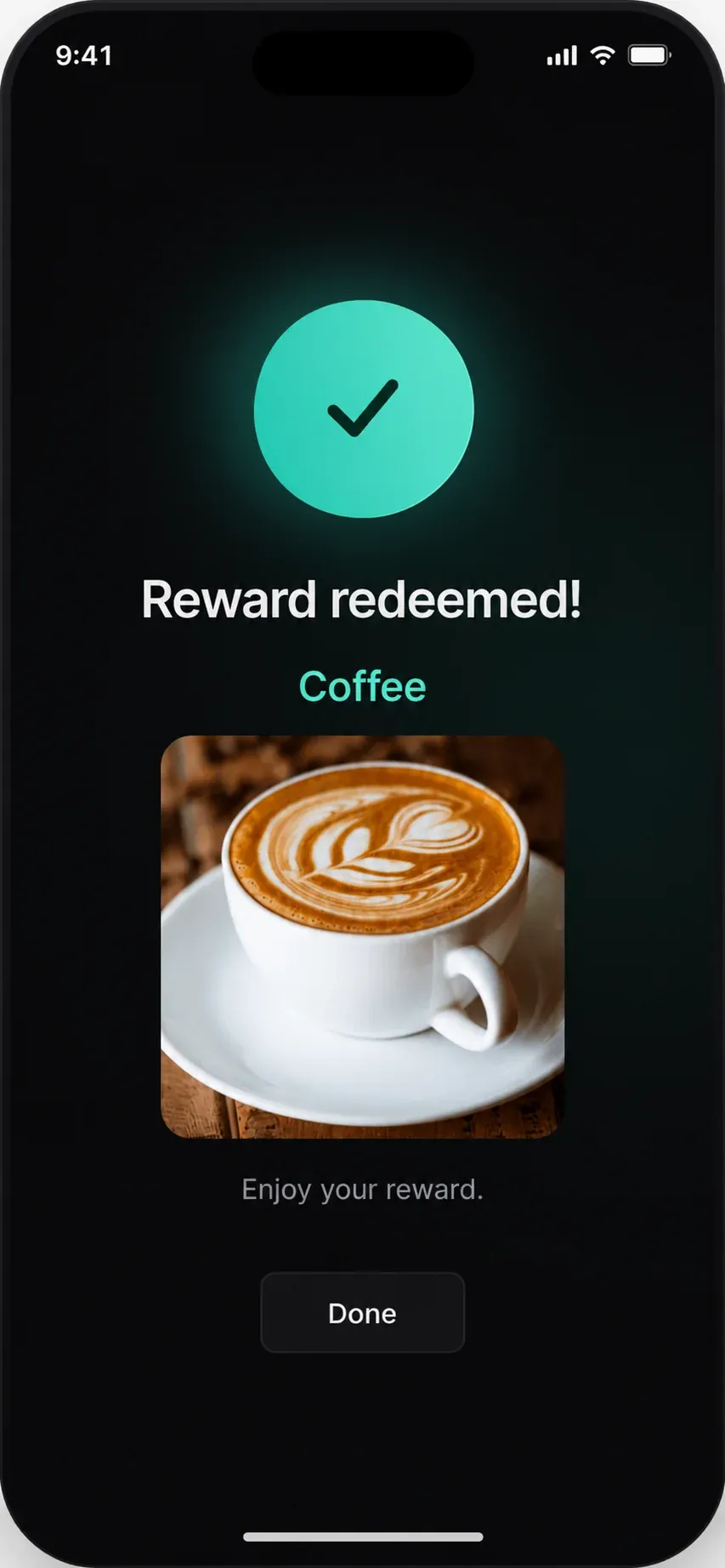
A native app built for the counter: open, scan, confirm, with clear success and error states.
Behind the apps
Spring Boot REST API for companies, customers, rewards, staff and billing. Every request is checked against its company and role.
Signs Apple passes, manages Google Wallet objects, registers devices and pushes updates when a balance changes.
Managed identity with short-lived tokens, secure refresh and passkey sign-in on the native app.
Apple PassKit, Google Wallet, payments and invoicing, email and commerce, each behind its own boundary.
Engineering behind it
From development to production
The components only matter if they work together. This is what happens in the few seconds after an employee scans a customer’s pass.
An employee scans the customer’s pass in the mobile app.
The API checks the employee’s role and the business the pass belongs to.
Points or a redemption are stored as a transaction.
The pass service rebuilds the pass and notifies Apple or Google.
The new balance appears on the customer’s phone.
The visit shows up in the merchant dashboard.